

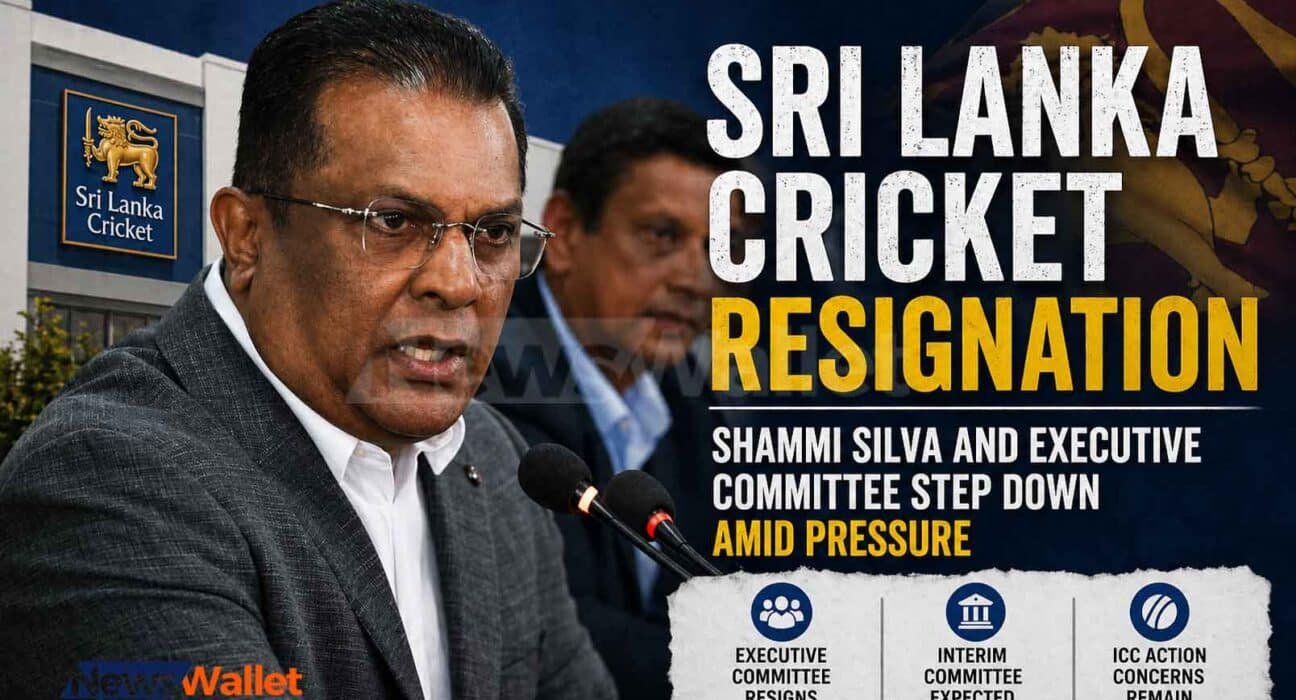
Sri Lanka Cricket resignation has taken a major turn as president Shammi Silva and the entire executive committee officially stepped down on Wednesday, following approval at a special meeting a day earlier.
The resignations came after a reported request from President Anura Kumara Dissanayake, who met Silva last week to discuss a smooth exit. The move follows growing public pressure and ongoing allegations of financial misconduct within the board.
The government is now expected to appoint an interim committee led by former MP Eran Wickramaratne. Former national cricketers Sidath Wettimuny and Roshan Mahanama are likely to be included to speed up reforms, although no formal announcement has been made.
Sri Lanka Cricket confirmed that Silva and all office-bearers had resigned with immediate effect. The decision was communicated to both the president and Sports Minister Sunil Kumara Gamage.
Silva first became president in February 2019, succeeding Thilanga Sumathipala. He went on to secure four consecutive terms, with three uncontested. During his tenure, Sri Lanka won Asia Cup titles in both men’s and women’s cricket. However, overall performance declined, with poor results in major tournaments including the 2023 ODI World Cup and recent T20 World Cups.
Despite strong revenue growth, the board faced repeated accusations of corruption and mismanagement. The situation escalated in 2023 when then Sports Minister Roshan Ranasinghe attempted to remove the board based on audit findings. Although Silva was briefly removed, he returned after a court ruling, leading to a prolonged conflict between the ministry and SLC.
Legal issues now surround the appointment of a new leadership. According to the SLC constitution, a vacancy should be filled by a vice-president. However, both vice-presidents, Jayantha Dharmadasa and Ravin Wickramaratne, have also resigned.
The government may use provisions under the Sports Law No. 25 of 1973 to appoint an interim body. This raises concerns due to the International Cricket Council’s strict stance against government interference in cricket administration.
In 2023, Sri Lanka faced suspension by the ICC after similar government action. The suspension resulted in funding cuts and relocation of international events. The ICC has consistently refused to recognise state-appointed committees unless elections are held.
To avoid another suspension, the government appears to present the resignations as voluntary rather than forced. However, if the ICC finds evidence of political pressure, Sri Lanka could face another ban.
The coming weeks will be critical as authorities attempt to balance public demand for reform with ICC regulations. The outcome will decide whether Sri Lanka Cricket can move forward without facing international sanctions.