


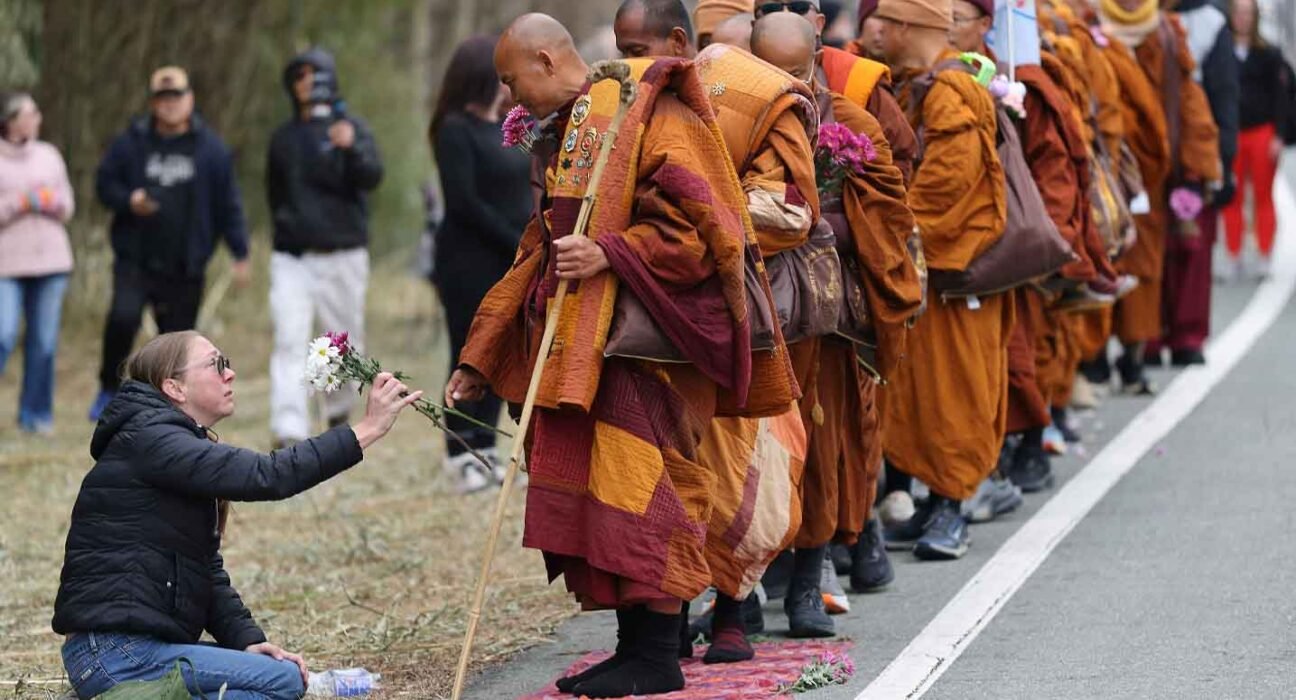
Walk for Peace Sri Lanka 2026 will begin on April 21, 2026, marking the start of a seven-day spiritual journey led by the Most Venerable Paññakāra Thero and twelve monks representing the Maha Sangha. This international initiative, which started in the United States, now brings its message of peace and compassion to Sri Lanka.
The program follows the Buddha’s teaching, “Caratha bhikkhave carikam bahujana hitaya bahujana sukhaya lokanukampaya,” which encourages monks to travel for the welfare and happiness of people. The event aims to show that peace grows through mindfulness and consistent effort, not force.
The opening ceremony will take place in Anuradhapura on April 21. At 4:00 PM, organizers will receive a sacred sapling of the Jaya Sri Maha Bodhi. At 5:00 PM, special religious observances will be held at Ruwanweliseya.
The pilgrimage will then move from Dambulla Royal Cave Temple towards Kandy. In Kandy, the Maha Sangha will meet the Chief Prelates of the Malwatta and Asgiriya Chapters. They will also visit Sri Dalada Maligawa to receive blessings.
During the journey, participants will carry the sacred sapling of the Jaya Sri Maha Bodhi along with relics from several historic temples. These include Nilagiri Cetiya, Madanwala Raja Maha Viharaya in Hanguranketa, Mahiyangana Raja Maha Viharaya, and Gangaramaya Temple.
The walk will end at Independence Square on April 28, 2026. A final procession will then carry the sacred relics and sapling to Gangaramaya Temple in Colombo.
Venerable Melpitiye Wimalakirti Thera leads the Sri Lankan coordination of the event. The government’s “Clean Sri Lanka” program supports the initiative as the main state partner. Several institutions, including the National Design Centre, the Tri-Forces, and the Department of Information, also contribute to the event.
A state ceremony will take place at Independence Square on April 28. At the same time, the National Design Centre will host an exhibition at Gangaramaya Temple on April 28 and 29. This exhibition will display Sri Lanka’s Buddhist heritage and traditional crafts.
Visitors can expect to see:
- Brass items such as statues, bowls, and ceremonial objects
- Lacquerwork including caskets and boxes
- Clay crafts and traditional statues
- Palm leaf creations like fans and sesath
- Natural dyed robes
- Dumbara wall hangings
- Traditional drums and paintings
This cultural program also supports an international project in Texas, USA. The project involves inscribing the Tripitaka in 10 languages and placing them within 840 stupas to create a global centre for Buddhist education.